
Skip to content
Migrants Life - Inspiring Stories of Global Belonging
  • Migrant Stories
  • Shop
  • News
  • Convince Us
  • 0 items

Migrants Life Volume 1 (2026)

Migrants Life Volume 1 (2026)

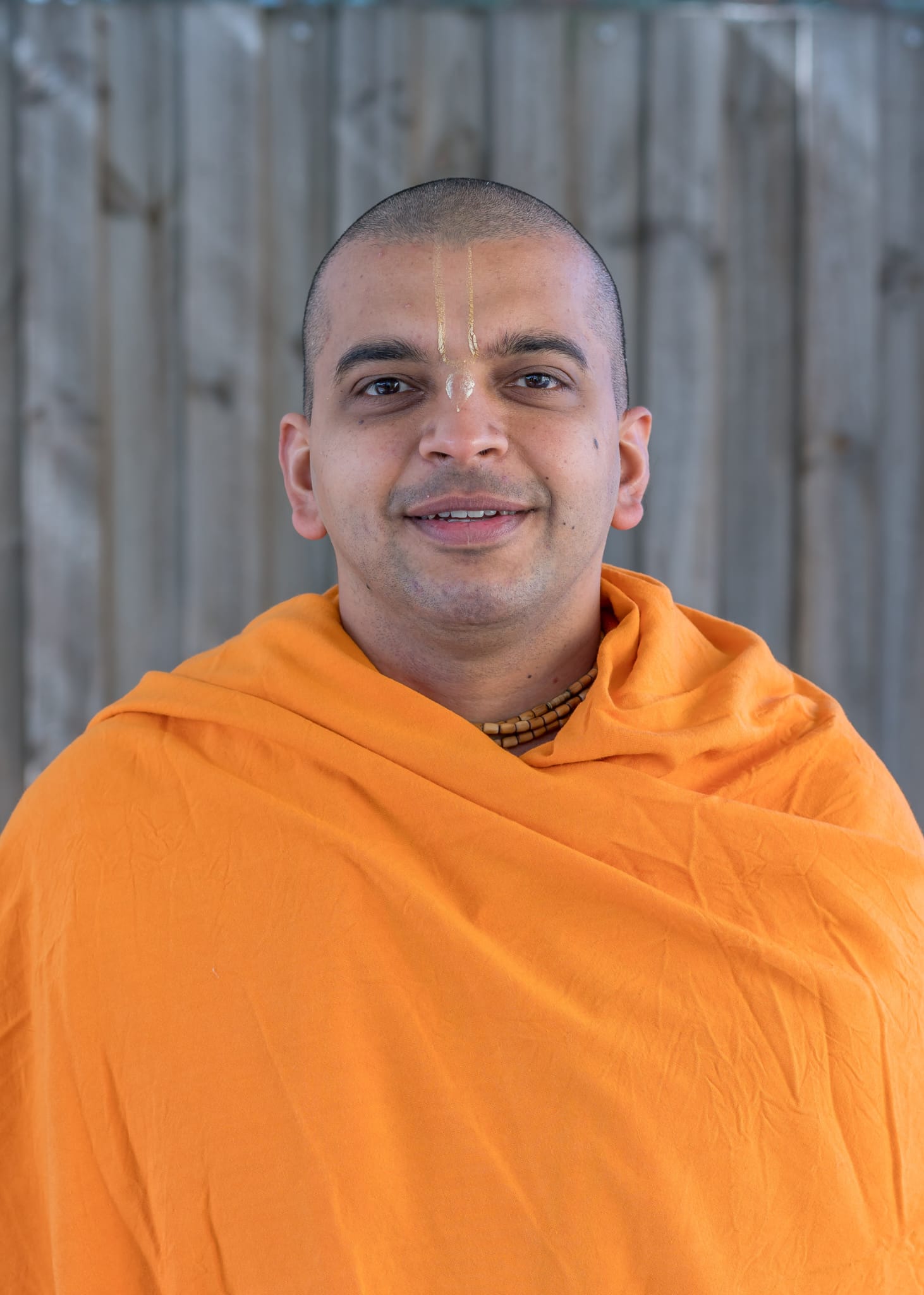
Arjun Sakha Das

Arjun’s family went from living in a lavish Delhi bungalow with a newspaper-featured waterfall to a modest rental after a sudden business collapse when he was fifteen. Through that financial strain, his father bought him a motorcycle using nearly twenty percent of their remaining savings, giving him a gift that carried a simple message: ‘I believe in you’.

He belongs to a family grounded in resilience – his grandfather fled Jhang during the 1947 Partition with nothing, rebuilding his life from scratch by selling milk and sweets. Born Akhil Khurana in 1987 in a West Delhi joint family home named ‘Krishna Villa’, he grew up with privilege, captaining volleyball teams and skating at the state level. But when his family’s business collapsed, he quietly tutored younger children to pay for his own expenses.

Later, after walking away from the shadows of the Delhi modelling industry to protect his integrity, he prepared to migrate to Australia in 2006. His agent switched his enrolled course to hospitality without his consent, and right before leaving, a seven-day Bhagavad Gita seminar transformed his perspective, leading him to give up meat. When his visa was rejected due to administrative errors – delaying him by four months – he did not despair, viewing the pause as a ‘divine arrangement’.

On 14 March 2007, he landed in Melbourne. Though a couple from his flight left him stranded at a train station, his cousin welcomed him with a warm meal – a gesture of care that inspired him to spread kindness in a foreign land. He worked at $8/hour jobs cleaning and stacking supermarket trolleys while completing his hospitality course without ever cooking meat, graduating second out of 250 students. After giving a talk on the Bhagavad Gita at the Melbourne ISKCON temple, a listener offered him a job at a travel agency on the spot, allowing him to repay his student loans, support his parents, and fund his sister’s wedding.

Having walked the path from material pursuit to formally becoming a monk in 2013, his core advice to anyone on a migrant journey is simple: ‘We polish the cage, but forget to feed the bird’. He encourages migrants not to focus solely on external status, but to remember to nourish their soul.

He stays deeply connected to his spiritual heritage as Arjun Sakha Das. Proudly, he serves the Melbourne community by leading the ISKCON food distribution program, where 70 to 80 volunteers prepare and serve thousands of free, dignified meals every week. In 2015, he counselled a young man who came to the temple doors planning to end his life, helping him choose hope instead.

Surrounding himself with a community of service and faith has taught him that every setback holds a deeper purpose. Looking back, he truly believes that everything that looked like a loss was actually a divine arrangement.

Hi’s story is featured in Migrants Life – Volume 1: Tales of Global Belonging, available here: https://www.amazon.com.au/Migrants-Life-Tales-global-belonging-ebook/dp/B0H3QQLW6G/

Listen to Arjun’s conversation on The Divesh Sareen Show here: https://www.youtube.com/@TheDiveshSareenShow

Basir Abbass

The legacy of Basir’s family in Herat, north-western Afghanistan, was built on enterprise and unwavering integrity. Born in July 1961, Basir Abbass grew up in a vibrant family compound where respect and responsibility were inseparable. His father, Nasser Abbass, traded kerosene and sheepskins, managing complex merchant deals with a sharp mind and absolute honesty.

From the age of eleven, Basir helped at the family pharmacy, memorising medicine labels in languages he could not yet read. Above all, his father instilled in him three golden rules: never lie, never borrow to pay interest, and never take drugs. His father warned that every trouble starts with a lie – a principle Basir carried like an unshakeable amulet throughout his life.

At eighteen, Herat erupted into war and civil uprising. Basir witnessed civilians falling to sniper fire and government buildings burning. When the Afghan Air Force bombed neighbourhoods suspected of harbouring rebels, Basir and his friends hid in a stranger’s cellar, playing cards by candlelight to drown out the terror of the falling bombs. Surviving those two days forged in him a “fearless calm” – a firm belief that if fate wanted him alive, nothing could break him. When political persecution forced him to flee, he left behind all family wealth, riding hidden in the back of a smuggler’s truck across mountain roads into Iran, eventually reaching Mashhad on a truckload of melons to begin life anew as a refugee.

In Iran, Basir survived through grit, hauling bricks, sweeping fabric shops, and trading jeans across southern ports before re-establishing contact with his childhood love, Persila. On 1st April 1986, Basir landed in Melbourne with a single suitcase and a vocabulary of just three English words: “Yes”, “No”, and “Thank You”. Refusing government welfare on principle, he declared that as long as his hands could work, he would earn his own way. He started in a garment factory in Richmond and moved to Toyota’s Port Melbourne assembly line, studying English every night until his tongue caught the rhythm of his new home.

Determined to find a career with a future, Basir pitched himself to the owner of Accent Aluminium Windows & Doors, saying: “If you think I am right for the job, hire me today. Monday may be too late”. Hired on the spot as a truck driver in a five-person workshop, Basir mastered every detail of manufacturing and operations. By 2007, he became part-owner and operational leader, transforming Accent into an Australian manufacturing powerhouse employing over 100 people. In a touching turn of destiny, when his former boss Robin’s separate business later struggled, Basir rehired him as a senior manager, proving that respect and gratitude always come full circle.

Having walked the path from war refugee to leading Accent Aluminium to the national stage – including being named a finalist in the national Ethnic Business Awards – his core advice to migrants and business leaders is grounded in self-reliance: “Freedom is not given – it is earned. And once earned, it must be used to lift others”. He reminds new entrepreneurs that while Australia provides opportunity, true success must be built with one’s own hands.

Today, Basir stays deeply connected to his heritage while building an enduring Australian legacy with his wife Persila and their children, Amir and Zahra. He mentors young migrant entrepreneurs and runs a business built on transparency, quality, and community care. Looking back on his journey from the dusty alleys of Herat to the showroom floors of Melbourne, he lives by a simple truth: “Life is a gamble. But if you bet on honesty, you never lose”.

His story is featured in Migrants Life – Volume 1: Tales of Global Belonging, available here: https://www.amazon.com.au/Migrants-Life-Tales-global-belonging-ebook/dp/B0H3QQLW6G/

Christine Wan

Christine’s family story began long before her birth, rooted in the resilience of her grandfather, Lien Tu-Dan, an orphaned labourer who fled China for Vietnam, and her grandmother, Lam Thi-Nam, who learned arithmetic using fabric rolls in a textile shop. In Cholon, Saigon, her family built a thriving life, operating factories and quietly giving to those in need. But the fall of Saigon in 1975 changed everything. Wealth became a dangerous liability, her grandfather was jailed until bribed free with two bags of sugar, and the family was forced to flee. Born in 1976 during a dark thunderstorm at St Paul’s Hospital in Saigon, Christine Wan arrived as a symbol of hope amidst total collapse.

When Christine was just a toddler in 1977, her parents made the agonising decision to escape by sea, leaving her behind in the safe care of her paternal grandparents. Their journey was harrowing: crawling through mud, sharing single orange slices – chewing even the peel to taste hope – and surviving Thai pirate attacks where her mother pleaded for their lives in Teochew. Tragically, three of her maternal aunts and uncles vanished at sea, their names resting on the family shrine in Sydney to this day. Christine herself escaped later on a small fishing boat picked up by the American Navy, spending two years in Los Angeles with her grandparents. In Sydney, her mother saved every penny for two years to fly to California and bring Christine home. When they finally reunited, four-year-old Christine did not recognise the weeping woman holding her, though love gradually rebuilt their bond in a crowded two-bedroom flat in Flemington.

Growing up in Sydney, Christine absorbed work ethic of her parents – and her father’s linguistic brilliance – he spoke six languages and worked as a court interpreter. But in 1993, when Christine was seventeen, disaster struck again. Home alone in the shower after school, she suddenly saw orange flames consuming the living room. She ran outside half-dressed, saved by Turkish neighbours who rushed to her rescue. Though half the house was destroyed, and all her school notes and textbooks were burned to ashes just months before her final school exams, Christine sat for them anyway, hardening her resolve with a single vow: “I will never give up”.

Refusing to let disaster define her, Christine turned pain into purpose, collecting five university degrees – three Bachelors and two Masters – as medals of survival and symbols of an unshakeable will. After working at her family’s bakery and rising through corporate finance at Citibank, she married her husband, Ken, and embarked on motherhood. In 2005, seeing a gap in how English literature and confidence were taught, she founded C3 Education Group (standing for Creativity, Confidence, and Communication), expanding it into a multi-campus institution built on the belief that education is not just about marks, but about instilling self-belief.

Having co-founded Speakworthy to teach courage through language, authored a book of poetry, and raised four children, Christine lives by a core motto that defines her life: “Fierce consistency is showing up when life falls apart”.

Today, Christine continues to mentor leaders and run C3 Education, frequently visiting the Ming Yue Temple in Bonnyrigg – which her grandfather helped build – to light incense and place oranges at the shrines of her ancestors. Looking back on a journey forged through war, sea crossings, and fire, she lives by the simple truth that everything her family built began with the courage they carried across the water.

Her story is featured in Migrants Life – Volume 1: Tales of Global Belonging, available here: https://www.amazon.com.au/Migrants-Life-Tales-global-belonging-ebook/dp/B0H3QQLW6G/

Dharmendra Patel

Dharmendra’s family roots run seven generations deep into the soil of Adalaj, a traditional farming village in Gujarat, India. Born in 1983 and initially named Nilesh, his grandfather Bhikhubhai Patel renamed him Dharmendrakumar Dilipbhai Patel after the famous actor and to signify a life rooted in dharma. To shield the family from the uncertainties of agriculture, his father, Dilipbhai, took a physically demanding job at a Reliance Industries textile mill in Naroda, while his educated mother, Anandi Ben, managed household finances with quiet frugality. Growing up with his younger brother Milan in a single rental room where meals were cooked, studies were done, and guests slept on the floor, he never felt poor. His parents saved for months to buy him a bicycle or TV every Dussehra, instilling in him a lessons-for-life truth that he carries to this day: “My real MBA came from watching my parents”.

During school holidays, Dharmendra and his brother learned the dignity of labor by loading crates at a beverage factory and peeling potatoes for hours at a chip unit. Raised on the rule that no one knocking on their door asking for help should go away empty-handed, he developed a deep social conscience. Though he excelled academically – scoring 194 out of 200 in Maths and Science in Year 10 – he studied Electronics and Communication Engineering at Bhavnagar University in Gujarati medium, struggling with English exams. During his final-year oral exam, an examiner attempted to crush his spirit, declaring: “You should not apply for a job; otherwise, you will be a liability to a business”. Rather than breaking, Dharmendra used the insult as fuel – he decided on the spot that he would never work for someone else, vowingly never making a resume in his life except for marriage.

In July 2005, Dharmendra landed in Australia on a one-year student visa at Deakin University in Geelong. His first night was spent shivering in a freezing room with a broken heater, but he persevered. Facing visa extension requirements, he bought a car and led a group of young migrants to Griffith for farm work. When their contractor vanished, leaving them without food or shelter, a local Sikh Gurdwara took them in for three days. Dharmendra endured gruelling days of manual farm labor when others quit, before returning to Geelong, passing his taxi license test, and driving shifts to master English, pay off expenses, and support his friends.

Driven to build a career on service, he enrolled in Migration Law, studying textbooks by day and driving taxis by night. After qualifying as a Registered Migration Agent, he opened his first office in Ahmedabad, carefully crafting a brand name that would become iconic: Aussizz Group. Accepting the toughest, previously rejected visa applications, he turned refusals into approvals through meticulous work. Returning to Melbourne in 2010 with his wife, Krina, he reinvested every single dollar back into professional branding, flyers, and digital marketing. With the birth of his daughter, Nishka, and later his son, Krishna, Aussizz Group expanded into a multi-branch global operation, built on a culture where employees were empowered as family.

In 2018, seeing that technology could solve systemic hurdles in immigration and education, Dharmendra launched his global tech company, KONZE (named after his son’s nickname, Kanji). Today, as the founder of Aussizz Group and KONZE, he remains anchored in humility, generosity, and strong moral leadership, living by the guiding conviction: “What you do today, does matter tomorrow”.

His story is featured in Migrants Life – Volume 1: Tales of Global Belonging, available here: https://www.amazon.com.au/Migrants-Life-Tales-global-belonging-ebook/dp/B0H3QQLW6G/

Gobal Subramaniam

Gobal’s family story began on the rubber estates of Nibong Tebal in Penang, Malaysia, where his grandparents arrived from India in the 1920s as indentured labourers. Born in July 1958, Gobal Subramaniam was the first surviving son in a close-knit family of eleven children. His father, who lost his own father at fourteen, worked by day and studied by night to become a respected schoolteacher and local temple president, while his mother tapped rubber trees at dawn. In a three-bedroom home overflowing with warmth, food was divided so everyone could share – instilling an early lesson that happiness grows when shared. Grounded in his father’s sacred rule that “Education is the one thing no one can take away from you”, Gobal excelled in science and maths, leaving home at fourteen on a scholarship to the Technical Institute in Penang before completing his HSC in Kuala Lumpur.

In 1977, eighteen-year-old Gobal landed in Melbourne on a Colombo Plan scholarship to study mechanical engineering at Monash University. He survived the shock of winter by cleaning pubs, washing dishes, and cycling everywhere to stretch his savings. On 3 April 1980, at a university disco, he met a first-year economics student named Usha – who shared his surname and his values – beginning a lifelong partnership where their lives simply ran together. Upon graduating in 1981, Australia introduced a mandatory “Return to Home” policy requiring foreign graduates to leave for two years. Forced to return to Malaysia, he worked as a maintenance engineer at a Japanese-managed cement plant, absorbing their philosophy: “When you are young, don’t count hours – learn everything”. Through two years of separation – keeping his love for Usha alive through recorded cassette tapes and letters – he endured the sudden death of his eldest sister when he could not afford the airfare home, enduring quiet grief while waiting for his permanent residency.

Returning to Melbourne in 1983 amidst an economic recession, Gobal took twelve-hour factory night shifts before securing a breakthrough role as a sales engineer at an industrial fan company. Studying for an MBA by correspondence at 4 AM, he mastered finance and operations, rising to General Manager of Siddons Industries Tools and Fan division by age thirty-one. When Stanley Tools acquired the company, Gobal drafted a strategic restructuring plan, volunteered his own executive position as redundant, and took a leap into entrepreneurship by purchasing the fan division in 1993 to create Aerotech Fans. Starting in his garage with Usha managing the books at night, he ran operations, sales, and deliveries himself, proving that disciplined planning creates its own momentum.

In the late 1990s, Gobal seized the opportunity to acquire Dawn Tools, a century-old iconic Australian manufacturing brand. Confronted by hostile suppliers and unionised factory resistance, he restructured operations, de-unionised the floor, and repositioned Dawn Tools as a world-class premium brand. When consultants repeatedly urged him to cut costs by moving manufacturing to China, Gobal firmly refused, insisting: “We build here. We are an Australian company”. He consolidated both companies under a single manufacturing facility in Heidelberg, preserving Australian craftsmanship and employing hundreds of local workers.

In 2016, after twenty-five years of building sustainable enterprises, Gobal sold Aerotech Fans and Dawn Tools to a major United States manufacturer, ensuring that his staff were retained and the historic legacy of the brand was honoured. Today, enjoying golf, family life, and mentoring young entrepreneurs, he lives by the quiet principle that real success lies in integrity, family, and remembering your roots. Looking back on his journey from a barefoot boy in Penang to an industry leader in Melbourne, he summarises his life with a simple truth: “Gratitude is not an event – it’s a way of breathing”.

His story is featured in Migrants Life – Volume 1: Tales of Global Belonging, available here: https://www.amazon.com.au/Migrants-Life-Tales-global-belonging-ebook/dp/B0H3QQLW6G/

Iris Du

Iris’s family story began in Myanmar, where her paternal grandfather owned a respected medicine factory and traditional Chinese medicine clinic that provided care and healing to the local community. Inside the factory, her father grew up watching how business could be a force for good. But when political tensions rose toward the Chinese community, the government shut down the factory overnight without warning. At just twelve years old, her father fled to China with his mother, leaving his father behind and scattering their family across borders. After years of hard farm labour in China, he reached Hong Kong, working as a tour guide and in heavy construction before building a small, reliable business of his own. Her mother grew up in Hong Kong among seven siblings in a family so poor that her grandmother once contemplated giving a child away. She worked up to five jobs at once – balancing accounting and import-export work – to ensure her future children would have choices. Together, her parents built a home rooted in quiet generosity, opening their doors to debt-ridden relatives, raising a cousin, and cooking large weekend meals for anyone in need.

Born in 1984 in a crowded, box-shaped Hong Kong apartment, Iris Du (Sau Kwan Du) grew up as a gentle, watchful child. Space was scarce; she slept on the top bunk above her grandmother, listening to the hum of traffic and learning to keep her feelings inside. At school, when a teacher struck her in front of the class for writing with her left hand, Iris felt ashamed and fundamentally flawed. Worse still, after suffering abuse during her youth, the cultural taboo surrounding difficult topics forced her into complete silence. Carrying this heavy, unspoken trauma, her high school grades collapsed, and she wandered the city streets trying to breathe. When her principal suggested she could no longer continue at school, her parents refused to give up on her. Hoping a change of environment would save their daughter, they applied overseas, and an offer letter arrived from a school in Melbourne.

At the airport, carrying two heavy suitcases and a heart full of fear, her father looked at her and offered a simple, quiet farewell: “Take care of yourself”. Landing in Melbourne as a teenager, Iris faced profound isolation. Her homestay offered no privacy – doors had no locks, and the host opened the bathroom door if her shower exceeded fifteen minutes. Lingering in silence, she decided she had to build a life from the ground up. She took a job washing dishes and serving in a busy Chinese restaurant, enrolled in drama classes to master English and build confidence, and deliberately placed herself in uncomfortable spaces to truly belong in Australian culture.

By her early twenties, Iris appeared to have achieved stability with a career, a home, and a marriage. But beneath the surface, old childhood trauma and difficult family dynamics simmered. In 2012, her world completely collapsed: her marriage ended, she lost her home, her dogs, and her job, and her grandmother and uncle passed away all at once. Standing on the edge of unbearable grief and contemplating ending her life, she came across a single line that became her lifeline: “What you feed your mind will lead your life”. That moment sparked a profound internal awakening. Iris realised that true leadership does not begin with managing others – it begins with leading oneself through fear, pain, and self-compassion.

Turning her suffering into a mission of service, Iris transformed into a renowned speaker, mindset mentor, and community leader. During the COVID-19 pandemic, she authored Great Leadership Starts with You: Be the Leader You Want to Be, which became an Amazon Bestseller. Alongside her partner, Thai, she co-founded You Want Group and the LEAD Association Melbourne West, a non-profit dedicated to fostering youth safety, inclusion, and family wellbeing. Embracing motherhood with her son allowed her to give her child the emotional safety she had once longed for, healing her inner child in the process.

Today, Iris Du stands as a beacon of courage for migrants and survivors alike, having even run for local council as an independent candidate to advocate for community wellbeing. Looking back on her path from a silent girl in Hong Kong to an empowered leader in Melbourne, she lives by a simple, transformative truth: “Leadership is not about position; it is about presence, self-care, and having the courage to rise”.

Her story is featured in Migrants Life – Volume 1: Tales of Global Belonging, available here: https://www.amazon.com.au/Migrants-Life-Tales-global-belonging-ebook/dp/B0H3QQLW6G/

Jatin Kotecha

Jatin’s family story is rooted in unwavering resilience and self-reliance. Born in the 1980s into a vibrant joint family in Rajkot, Gujarat, Jatin Ashokkumar Kotecha was shaped from birth by generations of struggle and character. His greatest early influence was his grandfather, Dayabhai Keshavji Kotecha, who was orphaned at five, fled the harrowing Partition of 1947, and once lived on the streets of Rajkot for three days without food. When a restaurant owner offered Dayabhai food, he refused charity and asked for work instead, washing dishes until exhaustion before eating his first meal. Dayabhai went on to become a pioneer in land and property development, leaving behind a written legacy and a golden rule that Jatin adopted for life: “Think as if you have already achieved it. Then work backwards to understand how”. From his fearless father – a man who loved motorcycles and once pulled the tail of a lion in the Gir Forest – Jatin learned courage and unconditional support, anchored by his father’s promise: “Wherever you are, remember I am there. If anything goes wrong, call me”.

Childhood independence arrived abruptly at age seven when his family sent him to St. Karve boarding school to channel his restless energy. Left in a room filled with toys, he turned around to find his family gone – a defining moment that forced him to stand on his own feet. He later moved to The Rajkumar College, a historic institution established in 1868, where he spent eleven years absorbing strict British-style discipline, captaining the basketball team, and serving as school prefect. At age thirteen, after signing up via mail for a Manali trekking expedition, he experienced the raw majesty of the Himalayas, sleeping in tents and skiing on plastic sheets. During his school farewell speech, he boldly declared that he would travel the world, climb mountains, and ride across continents.

In pursuit of his dreams, Jatin moved to England to study Business and Finance at Middlesex University. He landed in London on 11 September 2001 (9/11), watching from his window seat as airplanes circled endlessly over a closed Heathrow Airport in eerie silence. Armed with a Nokia 3310 and an A-Z street map, nineteen-year-old Jatin navigated the city alone, balancing his studies by scrubbing KFC kitchens, cleaning cinemas, and managing property renovations. In March 2006, he met Devangi, the love of his life, during a chance walk between classes. After returning to India to marry and running an intense snack-food enterprise together, his grandfather offered a final piece of wisdom before passing away: “You will have a better life abroad”.

In 2010, Jatin and Devangi migrated to Australia with just $1,000 in savings. After building a top-ranking national online window-furnishings business, they returned to Melbourne from Adelaide to establish long-term roots. But just as stability seemed within reach, tragedy struck. During a routine work meeting, Jatin received a devastating phone call: doctors had discovered a brain tumour in Devangi. Lying in her hospital bed, Devangi looked at him and asked a question that shattered their world: “What happened to our life? We didn’t do things we aspired to do. We didn’t even travel”.

That moment sparked a complete transformation. Jatin promised her full recovery and pledged that they would never postpone life for a distant “someday”. Following her successful surgery, they abandoned material status goals and embarked on a three-month journey across 24 countries and 70 European cities. Devangi embraced fitness, yoga, and a plant-based lifestyle, and together they re-centered their lives on health, family, and shared experiences – even travelling to Yangon, Myanmar, to reunite Devangi’s mother with her childhood home after fifty years.

Living by what Jatin calls the Four Pillars of Adventure – Climbing, Skiing, Running, and Riding – he resolved to break free from the traditional “checklist mindset” of career, mortgage, and savings that traps many migrants. During the COVID-19 lockdowns, he planned and executed a 15,000-kilometre solo motorcycle ride across the Australian outback over 50 days, beginning and ending with prayers at his local Shiv Vishnu temple. Overcoming extreme isolation, heat, and fatigue, he proved that courage is a daily choice.

Having explored over 54 countries, attempted six of the Seven Volcanic Summits, and once navigated a harrowing twelve-hour escape from active bombings in Tehran across the Turkish border, Jatin lives with deep intention. Looking back on a journey shaped by loss, love, and untamed horizons, he proves that true security comes from embracing every moment. In his words: “Life is not something to be postponed. It is something to be lived fully, deliberately, and with courage”.

His story is featured in Migrants Life – Volume 1: Tales of Global Belonging, available here: https://www.amazon.com.au/Migrants-Life-Tales-global-belonging-ebook/dp/B0H3QQLW6G/

Kalpesh Shah

Kalpesh’s family legacy was built on an unwavering commitment to honesty in the small town of Maroli, Gujarat, India. Born in 1984 in nearby Navsari and lovingly called “Champak” by his family, Kalpeshkumar Natvarlal Shah grew up as the youngest of five in a devout Jain household. His family ran a modest tobacco and tea shop, working from dawn until nightfall. His greatest early influence was his grandfather, Babulal Vasharam, who was known as the most trusted man in town – townspeople routinely handed him their gold, cash, and savings for safekeeping without receipts, and he always returned them untouched. In their joint family home, Kalpesh’s father, Natvarlal, and uncle shared the same shop counter and cash box without ever tracking who sold what, living purely by mutual trust. From his father, who often told him, “If you want a future, see the sun first”, Kalpesh learned the discipline of rising early and valuing character over material possessions.

At seventeen, Kalpesh moved 3.5 hours away to Baroda for Year 11 hostel life, learning to wash his own clothes and stretch daily budgets to as little as 50 paise. Coming from Gujarati-medium schooling, he struggled intensely with Physics and English; to bridge the language gap, he watched English films at home with the volume turned low, reading lips to connect words with meaning. He went on to study Biotechnology at a newly opened college near Navsari, where he met his lifelong friend Bhavdip – the street-smart companion who opened his eyes to the world and helped him create his very first email address in a small cyber cafe. After graduating, Kalpesh proved his commitment by showing up for a job interview during a torrential rainstorm when all other applicants stayed home, landing a role as a Medical Representative before moving to Cipla with triple the salary.

In 2008, seeking greater growth, he set his sights on Australia. Because his family could not afford the financial proof required for a student visa, 32 relatives and friends pooled their bank documents together to guarantee his application. On 22 May 2008, Kalpesh landed in Melbourne at the height of the Global Financial Crisis with just $2,500 in hand. Starting from scratch in a foreign land, his very first job was cleaning toilets at a Brunswick bar for a single night. For six gruelling months, he applied everywhere without success, before securing stable work in council community care and aged-care cleaning. To secure permanent residency, he flew back from a visit to India, drove straight from the Melbourne airport to a crucial job interview in Echuca, and earned a three-month trial that led to sponsorship.

After securing residency, Kalpesh married his wife, Jigisha, who left her career at HDFC Bank in India to join him in Melbourne. Together, they faced profound grief when they lost their first child, but they persevered, borrowing $1,000 to secure a deposit on their first modest home. In time, joy returned with the birth of their daughter, Maahi, and son, Dhiyaan. When Kalpesh’s mother passed away in India after a long illness, she left behind a folded bundle of hand-stitched baby clothes for her unborn granddaughter – a poignant blessing that changed Kalpesh’s perspective forever, reminding him that no amount of money can buy back lost time with loved ones.

The spark for entrepreneurship arrived unexpectedly when Jigisha made ghevar, a traditional Indian sweet, and posted a photo on Facebook; orders flooded in, eventually reaching 1,000 pieces during festival season. Driven to build something meaningful, Kalpesh launched Blue Heart Community Care from absolute zero. Refusing to take a single client from previous workplaces, he built the business step by step without advertising, relying purely on word of mouth, quality care, and personal integrity.

Having walked the path from a quiet village boy to leading an organisation that operates 12 supported homes and employs over 340 staff across Melbourne, his guiding conviction remains simple: “We were taught to save money. But I learned that trust builds more than savings ever can”.

Today, Kalpeshkumar Shah honours his grandfather’s legacy in every care decision he makes, proving that genuine service and deep-rooted trust are the true measures of a successful life.

His story is featured in Migrants Life – Volume 1: Tales of Global Belonging, available here: https://www.amazon.com.au/Migrants-Life-Tales-global-belonging-ebook/dp/B0H3QQLW6G/

Krishna Sevak

Krishna’s family story began in Baroda (Vadodara), Gujarat, India, where she was born in 1986 into a household that deeply valued education, especially for girls. Raised in Anand, her parents, Raksha Ben and Narendra Bhai, took daily train commutes for their jobs while her maternal grandfather, helped raise her. Growing up as a quiet, self-reliant child, Krishna walked to school every morning and spent her afternoons finishing homework on the veranda until her parents returned home at eight in the evening. She learned to manage hardships in silence while watching her favourite TV show Shaktimaan, guided by her family’s unshakeable rule: “Whatever you do, do it with honesty”.

At seventeen, after ranking tenth in her school for Year 10 with 89%, a sudden health crisis changed her life. A severe asthma attack led to a diagnosis of mitral valve prolapse – a heart condition stemming from untreated childhood rheumatic fever – requiring penicillin injections every three weeks for five years. Though health setbacks delayed her schooling and forced her to attempt Year 12 multiple times, she persevered, completing a Diploma in Electrical Engineering while watching Bollywood films like Kal Ho Naa Ho, quietly relating to the main character’s heart condition. When relatives questioned whether spending money on a daughter’s overseas education was a good investment, her father secretly funded her IELTS exams, believing in her potential when others doubted it.

In April 2008, twenty-four-year-old Krishna boarded a flight to Sydney weighing just 36 kg, carrying 40 kg of luggage – handling bags that weighed more than she did. Facing the shock of arrival alone, she worked casual childcare shifts, taking early 6:30 AM calls, walking 45 minutes from train stations, and twisting her ankles repeatedly on long walks. When her father suffered an accident in 2009 during the global recession, she returned to India to finish her B.Sc. degree. Through a family introduction, she connected with Ravi, whose calm, steady nature matched her simplicity. They married in 2010, moved to Melbourne, and boldly bought land to build their first home even before securing permanent residency.

Between 2012 and 2018, following the birth of her children, Rhythm and Jaynil, Krishna fulfilled a quiet promise she had made to her younger self: she became a stay-at-home mother so her children would never have to return to an empty house after school. In August 2018, Krishna and Ravi founded Sunrise2Sunrise, a disability support organisation named after their pledge to care for participants from one sunrise to the next. Starting from home with a three-hour service invoice raised in Microsoft Excel, Krishna grew from Finance Director to CEO, stepping out from behind emails to lead an organisation that now employs over 700 staff and serves 400 participants across Melbourne.

In 2020, another trial struck when Krishna suffered a Spontaneous Coronary Artery Dissection (SCAD) heart attack, requiring emergency care at Monash Heart. Refusing to accept the belief that she would be “sick most days”, she took up physical training, waking up at 4:30 AM every morning to build her endurance. In a profound personal victory, she trekked to Everest Base Camp, weeping upon arrival for everything she had overcome – childhood illness, severe weight loss, migration struggles, business stress, and a damaged artery. Along the way, she raised over $12,000 for the Cardinia Foundation to support local community groups.

Having walked the path from a frail girl in Gujarat to a CEO leading hundreds of carers, her guiding motto remains: “If I can do it, so can you”. She teaches that true courage is not hiding your pain, but knowing when to ask for help when you need it. Today, Krishna Sevak continues to transform lives across Melbourne, proving that resilience, integrity, and genuine care can turn every obstacle into a stepping stone for growth.

Her story is featured in Migrants Life – Volume 1: Tales of Global Belonging, available here: https://www.amazon.com.au/Migrants-Life-Tales-global-belonging-ebook/dp/B0H3QQLW6G/

Mohit Gupta

Born in 1976 in the tranquil hill town of Shimla, India, Mohit Hardevkumar Gupta – affectionately called “Preetu” at home – grew up surrounded by cool mountain air and a deeply supportive family. His father, Hardev Kumar, worked as a disciplined research officer in the electricity board, while his mother, Urmila, worked in a bank, instilling in Mohit and his younger sister, Komal (“Dimpy”), an early sense of independence and self-reliance. Guided by the wisdom of his maternal grandmother who lived with them in Sundar Nagar, Mohit learned patience and emotional balance, while excelling in sports as a state-level badminton player and an avid cricketer. After completing high school at DAV College in Chandigarh, he enrolled in a Hotel Management program in Ahmedabad, where he met Deepak, a fellow student from Bihar who quickly became his closest friend, guide, and soul brother. Deepak introduced him to a gentle philosophy of life, often reminding him: “Never trust a man who does not like flowers and children”.

In January 2000, Mohit arrived in Australia to build a new future alongside Deepak, sharing a home and dreaming big in Sydney. But on Saturday night, 8 April 2000, tragedy shattered his world when Deepak was killed instantly in a head-on collision on his way home from a night shift at the Wests League Club. Left alone to navigate overwhelming grief, twenty-three-year-old Mohit took full responsibility for identifying Deepak’s body, completing official police clearances, and fulfilling a heartbreaking final request from Deepak’s mother to place a watch on his wrist before the cremation in India. Serving as a pallbearer for his dearest friend divided Mohit’s life into “before” and “after”. Though his family pleaded with him to stay safe in India, Mohit chose to return to Australia alone, determined to finish the journey he and Deepak had begun together.

Back in Sydney, carrying heavy grief and financial vulnerability, Mohit focused entirely on daily survival. He secured work at a pie-making factory in the Northern Beaches, catching the 5:30 AM bus from Kensington every morning to start his gruelling 7 AM shift. Standing by hot machinery for long hours, eating Thai Chicken and Thai Broccoli pies every day, the physical routine and discipline of the factory floor became his quiet anchor and healing space. A turning point arrived during a three-week trip to New York for his cousin’s wedding, where his cousin’s husband handed him a book on Java programming. Reading the book reignited his mind, revealing a natural passion for logic, systems, and problem-solving.

Returning to Australia, Mohit enrolled in university to study programming, topping his university with an extraordinary 96% and naturally stepping into tutoring his fellow classmates. After securing Permanent Residency and marrying Sumita in an arranged marriage in 2004, he built a stable life focused on his growing family, including the arrival of their son, Dev, in 2006, and daughter, Vanya, in 2010. Mohit transitioned from hotel management into academic leadership, excelling as Head of Vocational Programs at Carrick Institute before securing a Senior Educator role at Swinburne University of Technology in Melbourne. In 2012, he achieved another personal milestone by sponsoring his parents for Australian residency, bringing his journey full circle.

Rising to become Associate Director at the Centre for Foundation Studies at Swinburne, Mohit views leadership not as authority, but as empathy, mentorship, and selfless service. During the COVID-19 pandemic, watching educators deliver physical learning materials directly to isolated students reminded him of a guiding truth: “If you want to see miracles, get out of your office and visit the classroom”. Today, Mohit Gupta continues to uplift students and migrants, proving that out of profound tragedy and humble factory floors, a life built on integrity, discipline, and purpose can become a beacon of hope for many.

His story is featured in Migrants Life – Volume 1: Tales of Global Belonging, available here: https://www.amazon.com.au/Migrants-Life-Tales-global-belonging-ebook/dp/B0H3QQLW6G/

Posts navigation

Older posts
  • Terms & Conditions
  • Privacy Policy
  • Contact Us

© 2026 Delivered by Custom Web Apps